
TravelWish
Online Vacation Rental Marketplace Website
Case Study
TravelWish
Online Vacation Rental Marketplace Website
Case Study
Product Designer
Design Strategy, User Research, Marketing Research, Research analysis, Data Synthesis, User Stories, User Flows, Information Architecture, Wireframing, Prototyping and Usability testing
Design thinking, User research, Interviews, Contextual inquiry, Card sorting, Competitor analysis and heuristic evaluation
Responsive Website
Axure, Illustrator, Pencil
Online travel Services
12 Weeks
The goal of this particular project was to discover the essentials of secure and comprehensive online marketplace for travel, short-term rentals and experience services.
And also to identify the shortcomings of current online traveling platforms and to explore further design solutions to help overcoming the existing problems.
How can people plan travelling and all they need on the go in one place, connect with local owners who rent out their properties, experience living like a local and manage their rentals and bookings including accommodations and local experiences easily, securely and more cost–effective?
In this project quantitative research has been conducted including contextual inquiry, interview and usability testing.
Qualitative user research has been conducted over a period of two weeks in the form of interview with participants from diverse demographics including age, gender, marital status, profession and location to gain insight into users’ experience and pain points.
User segmentation process has been defined personas based on users’ main goals which reveals our two key personas, hosts and guests.
Subsequently, the user research has been used to create user or customer journey maps for each persona which revealed additional insight into their pain points and deeper perception into users ‘ goals, attitudes and behaviour which resulted in creating an optimal User Flows.
Competitor analysis has also been conducted in detail as part of marketing research in which some shortcomings in travelling industry have been noted that mostly had been confirmed by user research.
Furthermore, the information architecture, wireframes and prototype design of the “TravelWish” website has been completed, addressing users and business needs from the key findings of user research and market research.
And lastly, User testing has been conducted with participants, as potential users representing identified personas to determine the success of the tasks and validate the usability of design solution.

My design approach and thought Process is based on design thinking and human centred design to find users’s paint points and turn them into delight points.
I apply a non-linear, iterative process to understand and study users, explore information, analyze data, challenge assumptions, synthesize data, map user stories, define user flows, redefine problems, ideate creative ideas, validate design and finally create innovative solutions.
Empathise > Research > Analyse > Discover > Synthesise > Define > Envision > Ideate > Decide > Design > Validate > Iterate > Develop > Deliver


User research and interview with few people as representative of this type of platform users has been conducted over a period of 2 weeks on topic of online accommodation-letting service.
Interviewees were from a different range of age group between 20 to 50 both male and female with diverse cultural background.
The affinity map was conducted in which a qualitative data collected from user research findings was organized and grouped in categories.
Numerous subjects were discussed in the interview and a wide range of questions have been asked in relation to their goals, behaviours and attitudes in which as a result, provide an insight into people ‘s experience as being hosts and guests.
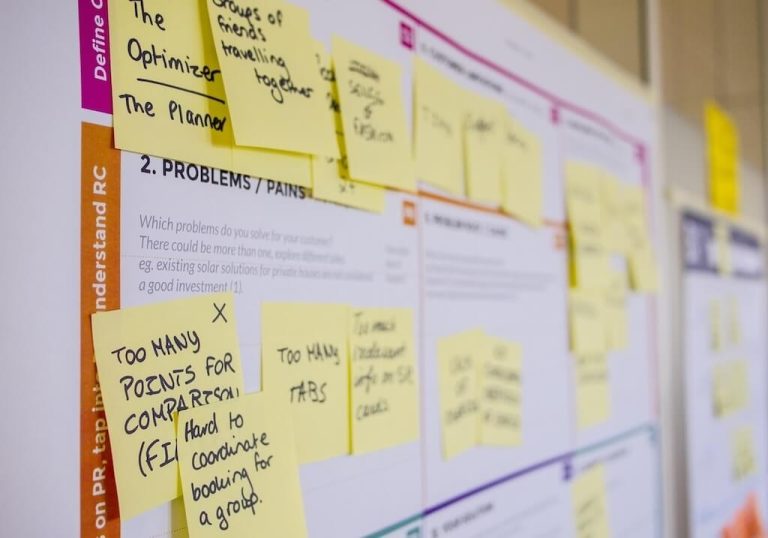
Generative user research unveiled some insights in terms of users’ goals, behaviours and attitudes. It has been noted through research that there are a number of similarities between hosts and guests in terms of their objectives.
However, there are some dissimilarities in terms of their behaviour and attitudes among users regardless of their goals as hosts (local property owners) or guests (travelers).
Market research and Competitor analysis has been conducted across three websites including Booking.com, Airbnb and HomeAway which all considered main competitors among online rentals marketplace, promoting diverse range of short-term rentals accommodation worldwide.
Although they all pursue similar objectives, their approach is slightly different and so do their content and their target audience.
Through marketing research and competitor analysis some shortcomings have been noted in competitors’ platforms which mostly have been confirmed by user research.
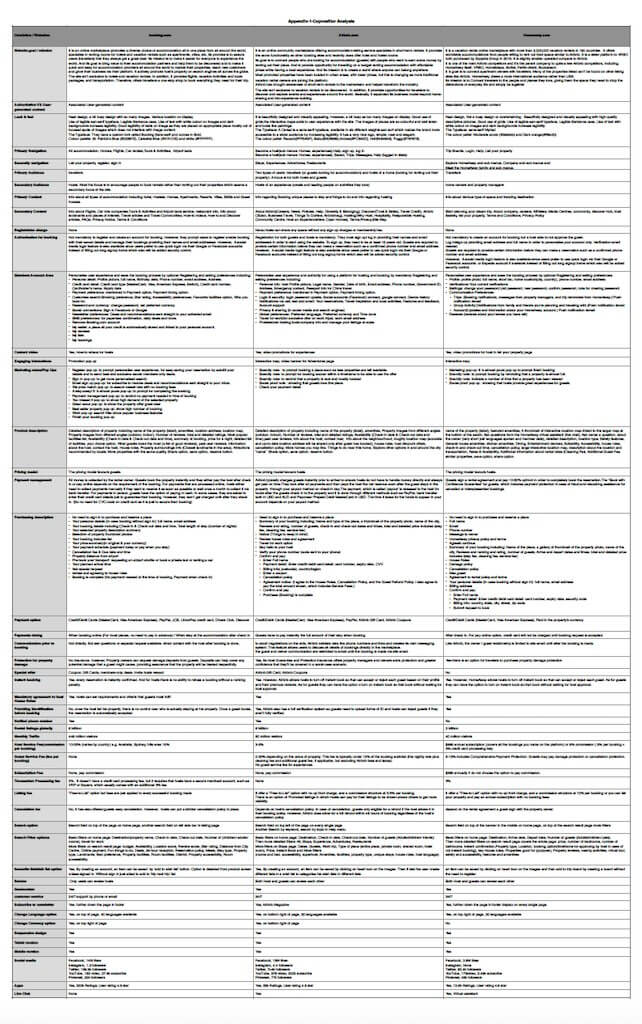

There have been some assumptions in relation to product itself and product users that generative research findings have been validated them.
These assumptions have been validated and either confirmed by research findings or have been in conflicts with them.

In the process of identifying target audience or product users, a varied range of groups with different goals and subgroups with the same goals have been noted among users. However, despite considering all these subgroups of users, user segmentation primarily has been defined our users based on their main goals.
Our two key personas which have been identified are hosts and Guests. Therefore, it has carefully endeavoured to select interviewees, as representative of product users, to include all the groups and subgroups identified.
Hosts are people or owners who would like to rent out their properties to travelers and guests are people or travelers who are looking for properties to rent and stay as temporary accommodation.
The user research study has revealed both groups of users’ needs including hosts and guests. In response to users’ needs and their pain points, users’ goals have been identified through research findings which can result in resolving users’ problems.
The data collected from the user interviews and the key insights from user research has revealed the users’ pain points. Through affinity mapping, the pains identified in research findings synthesized and problems grouped under common themes which defined main users’ problem.
In addition to persona, a user journey map were developed to communicate the pain points and guide new design opportunities.
A user journey map were developed for each group of persona based on their goals, behaviour and attitudes to communicate the pain points and guide new design opportunities.


How can people plan travelling and all they need on the go in one place, connect with local owners who rent out their properties, experience living like a local and manage their rentals and bookings including accommodations and local experiences easily, securely and more cost–effective?
TravelWish is an online vacation rental marketplace and travel services website provides people a worldwide online platform that enbles local property owners to easily rent out their places to travellers and allows travelers to efficiently search, find and book what they need with affordable prices, all-in-one including short-term vacation rental accommodations, flights, transportation, restaurants, food delivery, local experiences services, events, tours and adventures in partnership with other agencies.
This platform allows connection between local property owners as hosts and travelers as guests.
Booking.com, Airbnb and HomeAway are some examples of its competitors.
TravelWish is committed to provide the most secure and comprehensive online traveling service and the best customer experience from the beginning to end.
The generative research study has revealed users’ pain points. Therefore, in response to users’ problems and their pain points, a product is required which is able to provide delight points and solve users’ problems. These solutions discovered through research findings would be considered as product or business goals for TravelWish.
The MVP for TravelWish has been identified which is a minimum viable product (MVP) that defines a product with just enough features and functionalities to be able to use effectively by early customers, who can then provide feedback. Then these validated learning can be applied for future product development that will result in maximum productivity of the product.
Based on the above problems and MVP identified, which will help to understand the business requirements, I worked towards addressing these pain points by coming up with opportunities. These potential solutions with considering technical feasibility of the design concept would be able to turn these pain points to delight points.

UserFlows were developed based on personas and potential solutions in response to their pain points.


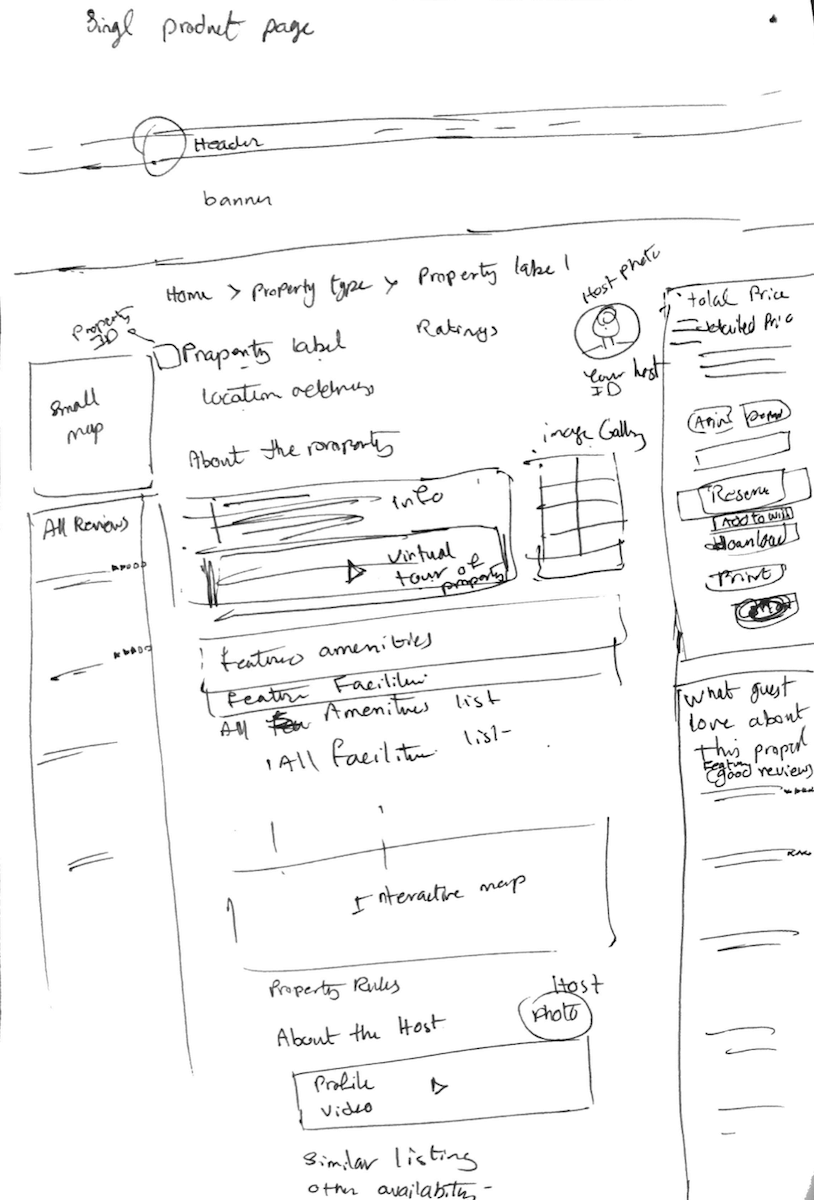

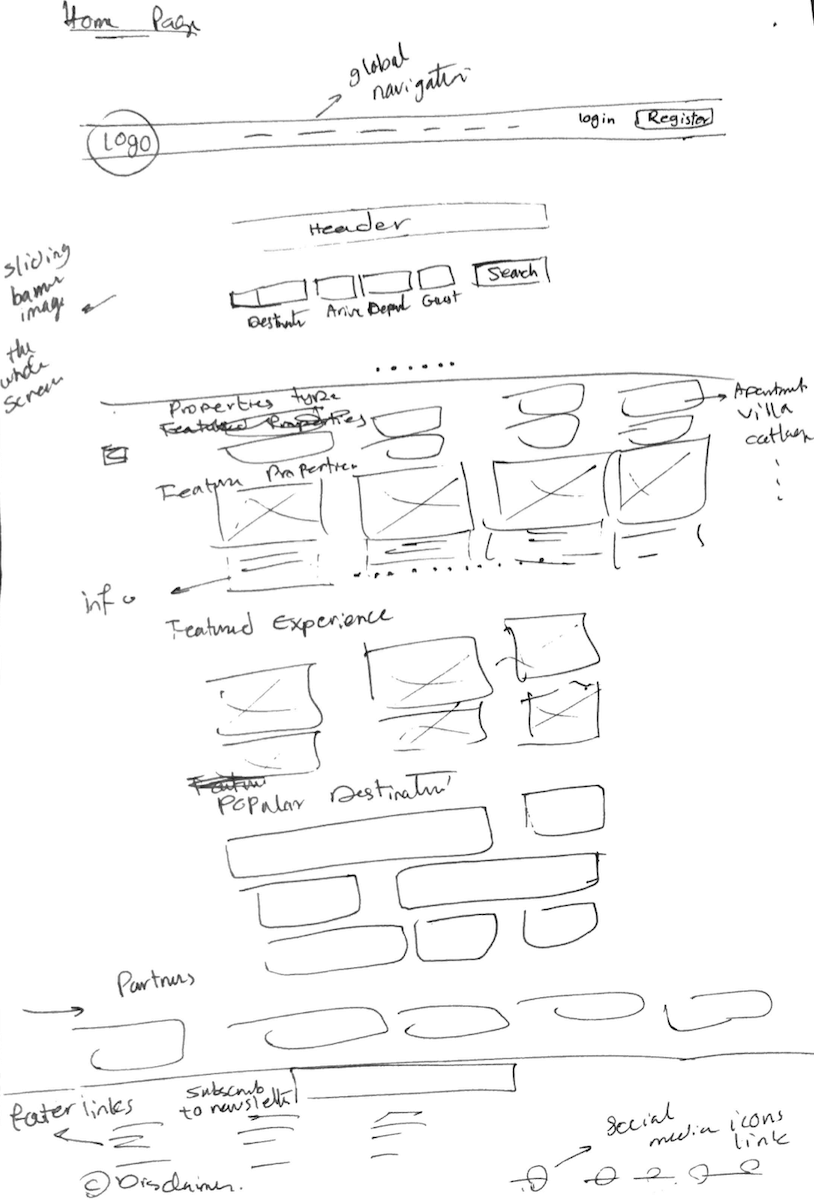


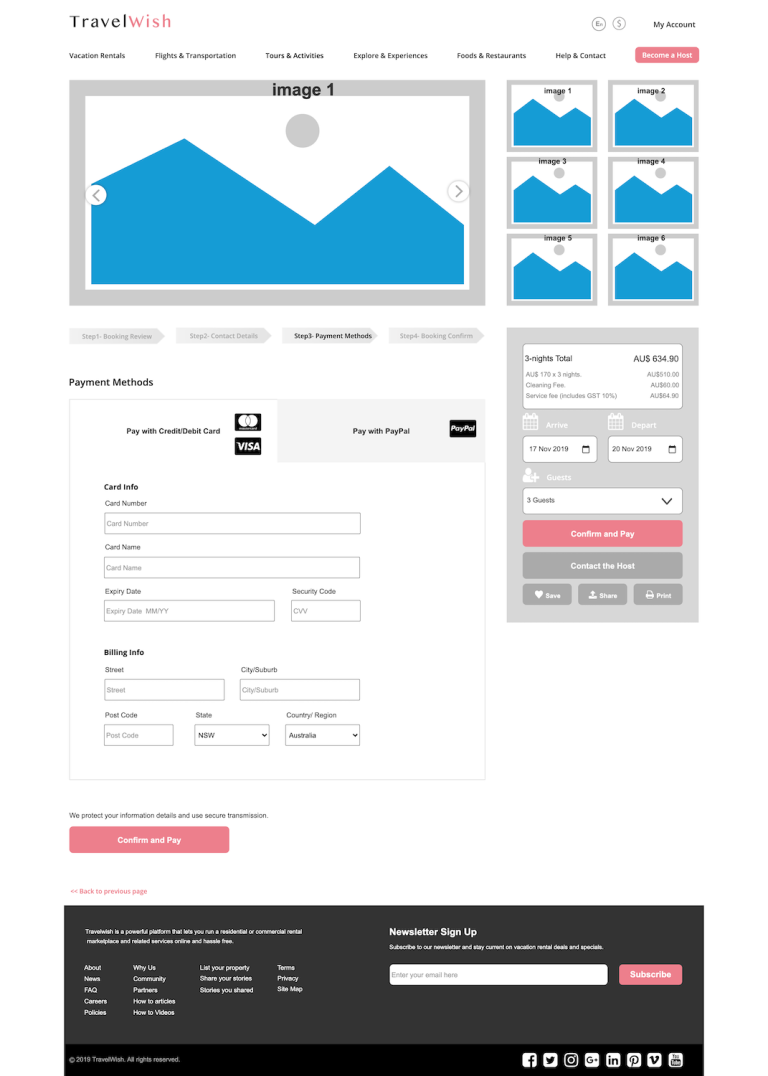
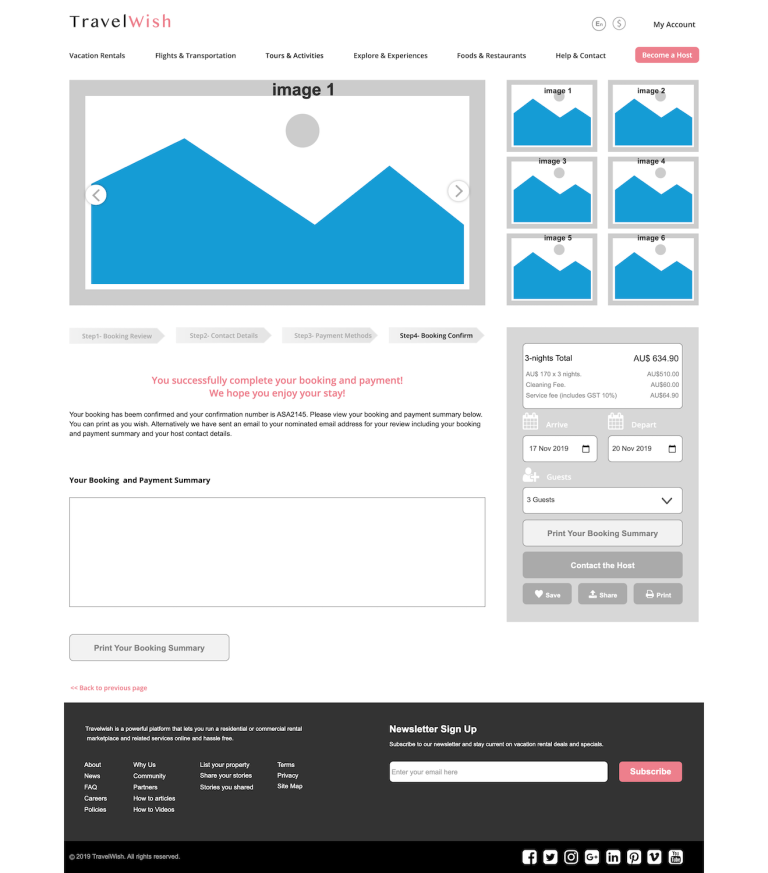


The prototype of TravelWish website was tested to validate the proposed design solutions and wether they would solve users’ problems. The recruitment plan were done and participants as representative of potential users including returning participants from user research phase and new participants were recruited for this round of testing.
Usability testing has been conducted over a period of three days in which on average every user testing session took roughly one hour to complete.
During user testing sessions participants’ interaction with the website prototype and the steps they follow to complete the tasks and explore the website functionality were closely observed.
They were asked to complete a total 16 tasks and sub-tasks based on scenarios which had been written in advance as a test plan for the purpose of exploring the key website’s functionality.
All these testing sessions have been audio and screen recorded for the purpose of further observation and analysis.

Findings from usability testings indicated that users found 87.2% of the tasks were easy to do and that 96% of the tasks have been successfully completed by users.
TravelWish is an online vacation rental marketplace and travel services website provides people a worldwide secure online platform that allows travelers to easily search, find and book what they need all-in-one including short-term vacation rental accommodations, flights, transportation, restaurants, food delivery, local experiences services, events, tours and adventures with affordable prices in partnership with other agencies.
Positive feedbacks have been obtained from the users regarding the inclusiveness of the platform to provide travelers all they need in one place with informative and structured content.
I like the idea of having more choice and seeing all I might need for travelling in one website, even though I might not always want to do them at the same time.
I find it really simple to understand. The site makes it very clear the steps I should take specifically for searching and filtering in the order I want to see them up until booking what I want.
Positive feedbacks have been obtained from the users regarding the inclusiveness of the platform to provide travelers all they need in one place with informative and structured content.
I like the idea of having more choice and seeing all I might need for travelling in one website, even though I might not always want to do them at the same time.
There are some shortcomings and limitations that have been identified in this qualitative research which might restrict the ability to reach a precise conclusion.
As a future plan the next step would involve applying the proposed solutions and possibly upgrading the prototype in terms of interactivity, functionality and fidelity to some extent followed by a second round of testing to assess the improvement of the prototype.

There are some key takeaways that I have learned from this project.
Thank you for reading through my research, design and thought process!